
The Hyperion Elite 6 features in a new seven-mile city run with content creator Eric Tai, who is returning to marathon training after a broken fifth metatarsal interrupted his season. The story is presented as a pre-race taper run through New York, but it also offers a useful reminder: a race shoe should be judged by how well it supports the final phase of training, not simply by how aggressive it looks on a product page.
Key takeaways for runners
- The Hyperion Elite 6 appearance is part of a Brooks and Runner’s World video collaboration, not an independent laboratory review.
- Brooks lists a Carbon SpeedVault+ plate, DNA GOLD cushioning and a race-focused fit as the shoe’s main features.
- A seven-mile taper run is mainly about maintaining rhythm and confidence, not proving marathon readiness.
- Carbon-plated shoes can change how forces are distributed through the lower limb, so comfort and familiarity still matter.
- Runners returning from injury should treat a celebrity or creator’s run as context, never as a template for their own progression.
The Hyperion Elite 6 run is the story
Tai’s run begins at sunrise in Chinatown, crosses the Brooklyn Bridge, moves through Tribeca and follows the Hudson River before finishing in Central Park. The route is deliberately cinematic, but the training detail is more restrained: this is a seven-mile taper run ahead of his hometown marathon.
That distinction matters. A taper is the period when a runner reduces training load before a race while retaining enough intensity and routine to feel coordinated. It is not the time to build new fitness. A controlled city run can therefore serve several practical purposes: checking that the legs feel responsive, confirming that race-day clothing and footwear are comfortable, and preserving the psychological rhythm of running without creating unnecessary fatigue.
The wider context is significant. According to the original Men’s Health report, Tai broke his foot during a London marathon earlier in 2026 after colliding with another runner. He completed that race in 2:54:17 despite a fractured fifth metatarsal, then faced a period in which he was unsure whether he would return to running. The lesson is not that toughness makes injury irrelevant. It is that a comeback is defined by the work between the dramatic moments: diagnosis, patience, progressive loading and a return to confidence.
For readers building their own base, ETP’s beginner’s guide to running a 5K is a more appropriate starting point than copying a marathoner’s taper. The training principle is simple: match the run to the athlete in front of you.
What Brooks says the shoe does
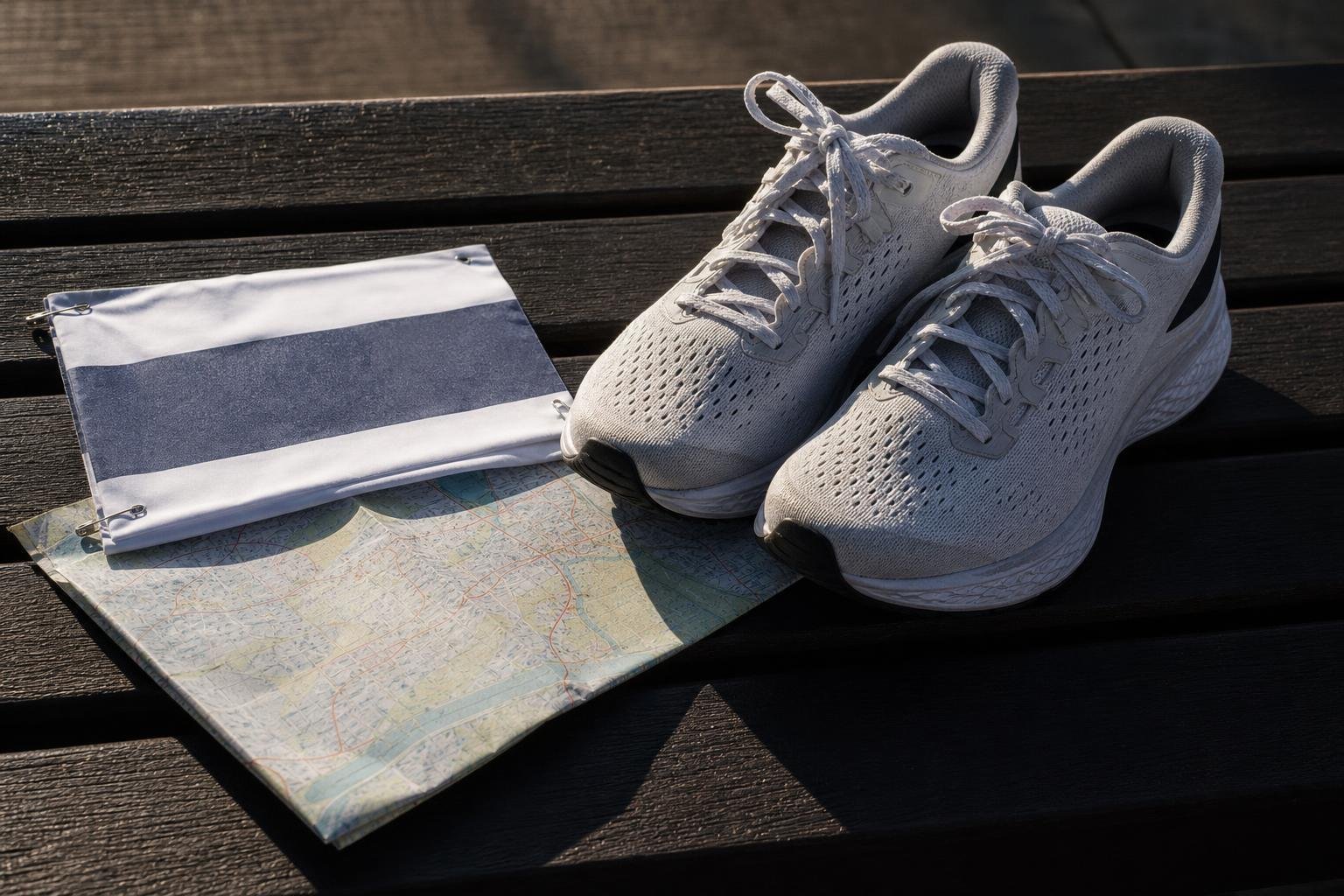
Brooks describes the Hyperion Elite 6 as a race-day shoe developed with its sponsored athletes. The manufacturer lists a revised SpeedVault+ carbon plate, updated DNA GOLD cushioning and an underfoot geometry designed to help the runner move forward efficiently. Those are manufacturer claims about construction and intended use, not independent proof that every runner will run faster in the shoe.
A carbon plate is a rigid element embedded in the midsole. Its role is not to act like a spring in isolation. The plate interacts with the foam, the shoe’s rocker shape and the runner’s own mechanics. The result can be a more lever-like sensation through the forefoot, particularly when pace rises and the runner is applying force quickly.
Current research supports a careful interpretation. A 2026 systematic review and meta-analysis found that carbon-plated shoes do not produce one consistent biomechanical response across measures such as hip, knee, metatarsophalangeal-joint power, leg stiffness or step frequency, although reduced ankle power was associated with plated footwear in the included comparisons. In other words, a shoe may alter the work done by different joints without creating an identical experience for every athlete.
That is why “more advanced” does not automatically mean “better for every session”. A shoe that feels lively at marathon pace may feel unstable during a slow recovery jog, awkward on tight corners or unnecessarily demanding for a runner who has not adapted to its geometry.
Race-shoe comfort beats race-shoe theatre
The visual appeal of a super shoe is easy to understand. Tall foam, a pronounced rocker and a stiff forefoot signal speed. Yet the most useful question is quieter: can you maintain your intended pace without fighting the shoe?
Before using any plated racing shoe in competition, assess four checkpoints:
- Fit: the heel should remain secure without excessive lace tension, while the forefoot should allow natural toe movement.
- Control: test corners, cambered roads and changes of pace rather than running only in a straight line.
- Load tolerance: notice whether the calves, Achilles tendon or forefoot feel unusually stressed after the run or the following morning.
- Familiarity: reserve enough training time to learn the shoe’s rhythm before race day.
None of these checks guarantees that a shoe will prevent injury. They simply reduce avoidable surprises. Runners managing a return from injury should be especially conservative. ETP’s reporting on how tendon problems may develop before pain becomes obvious is a useful reminder that symptoms, training load and recovery should be considered together rather than judged from one run alone.
Where race rules enter the picture
For most recreational runners, shoe legality is not the main concern. For athletes competing in World Athletics ranking competitions, it is part of race preparation. The current World Athletics regulations, effective from 20 April 2026, set a maximum sole thickness of 40 millimetres for road-running events and regulate the number and placement of rigid structures in the sole. The organisation also maintains an approved-shoe list and gives officials authority to conduct shoe control.
That does not mean every local fun run will inspect footwear. It does mean serious competitors should check the rules of their event rather than assume that a commercially available shoe is automatically approved for every type of competition.
The rulebook also reinforces a broader point: modern racing footwear is a system, not merely a piece of foam with a carbon insert. Sole thickness, plate design, geometry, availability and athlete-specific customisation all form part of the performance conversation.
A smarter way to read the video
Tai’s seven-mile run is compelling because it connects equipment with place, memory and recovery. But the video should be read as a snapshot of one runner’s preparation and a branded presentation of one shoe, not as a controlled comparison against rival models.
For an active reader, the useful takeaway is more practical. Use a taper run to confirm that your preparation is settling into place. Use a new race shoe early enough to identify fit or loading problems. And when returning from injury, let gradual, repeatable training carry more weight than a dramatic finish line or a professional-looking kit list.
The Hyperion Elite 6 may be designed to feel fast, but the best race shoe is still the one that lets an individual runner express their trained pace with control. Speed is valuable. Confidence that has been earned through consistent preparation is more valuable.