
At 83, Dave Obelkevich is preparing to finish his 50th consecutive New York City Marathon on 1 November 2026. He is the only person to have completed every edition of the five-borough race since the course expanded across New York in 1976 — an extraordinary record, but also a useful case study in lifelong running.
Key takeaways for lifelong running
- Obelkevich has changed the goal from chasing a three-hour marathon to completing the course safely.
- His story shows why consistency is often built through adaptation, not stubbornly repeating the same training approach.
- Strength, balance and medical awareness become increasingly important as runners age.
- Training partners can provide practical support as well as motivation, accountability and companionship.
A 50-year streak built on adjustment
Obelkevich’s streak began with the first five-borough New York City Marathon in 1976. Before that, the event consisted of several laps of Central Park. The new course travelled through Staten Island, Brooklyn, Queens, the Bronx and Manhattan, finishing in Central Park — a 26.2-mile route that remains one of the world’s most recognisable city marathons.
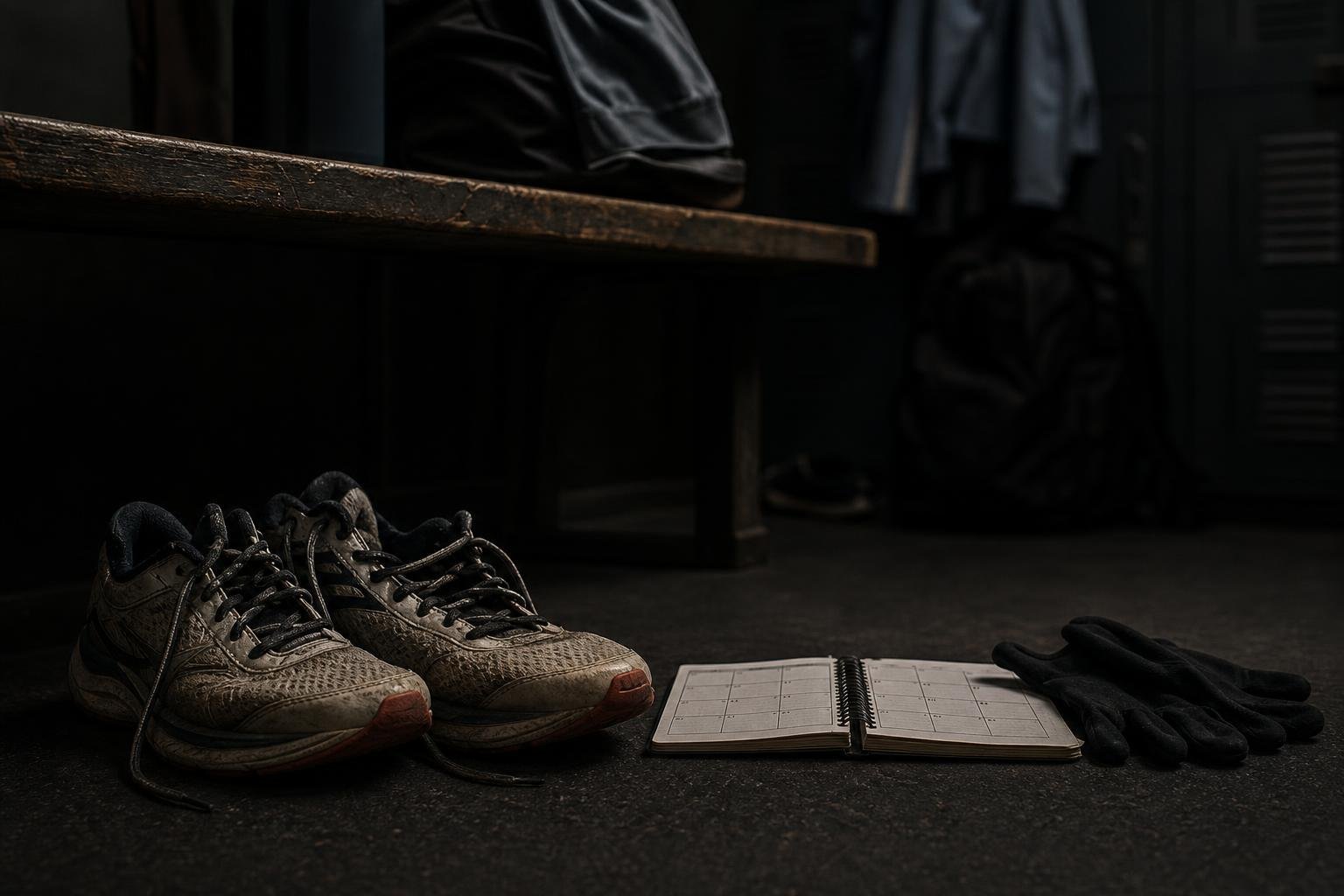
According to Men’s Health’s report, Obelkevich’s relationship with the race has changed over time. In his faster years, he trained with performance targets in mind and ran the 1982 marathon in 2:40. Later, the priority became finishing rather than preserving a particular pace. He now describes his goal as using a calendar rather than a stopwatch.
That distinction matters. A long athletic life rarely looks like one uninterrupted performance peak. The body changes, recovery takes longer and the consequences of ignoring warning signs can become more serious. The sustainable athlete is not necessarily the one who trains hardest every year, but the one who can modify the target without abandoning the activity. Our guide to focusing on what you can control as an athlete explores a related mindset: directing effort towards the decisions you can actually influence.
What ageing changes for runners
A review of masters running published in the Sports Medicine and Arthroscopy Review notes that lifelong endurance training can slow some age-related declines in aerobic function and muscular strength. It does not, however, eliminate the effects of ageing. Running speed, maximal aerobic capacity, tissue tolerance and recovery can still decline.
For a marathoner, that can change the risk-reward calculation. A pace that once felt controlled may now create excessive fatigue. Hills may require more walking. A minor balance problem late in a race can become more consequential than a small loss of speed. Obelkevich’s account reflects those trade-offs: he has accepted more walking on hilly sections and adjusted his expectations rather than pretending his younger performances remain the relevant benchmark.
This is not evidence that every older runner should attempt a marathon. It is evidence that age-appropriate goals should be based on current capacity, medical history and preparation — not on an old personal best.
The overlooked value of strength and balance
Running develops cardiorespiratory fitness, but it does not cover every quality needed for durable performance. The US Physical Activity Guidelines recommend that older adults combine aerobic activity with muscle-strengthening and balance work. The aim is not merely better race performance. Strength and balance support everyday function and may reduce the consequences of a trip, stumble or sudden change of direction.
For runners, that means looking beyond weekly kilometres. A sensible long-term programme may need to include resistance exercises for the legs, hips and trunk, alongside movements that challenge single-leg control and stability. The exact exercises and loading should reflect the individual’s training history, injuries and health status; a marathon story cannot provide a universal prescription. For an introduction to resistance-training options, see our guide to beginner free-weight exercises for stronger foundations.
Obelkevich has also spoken openly about balance difficulties late in the 2025 race, when fatigue affected him. That detail is more instructive than any motivational slogan. Fatigue is not just an uncomfortable feeling at the end of a marathon: it can alter coordination, decision-making and the ability to respond to uneven terrain or crowded sections of a course.
Know when persistence becomes risk
Obelkevich’s history includes a 1975 race he abandoned after repeated dizziness. He also survived emergency surgery for an aortic aneurysm in 2020 before rebuilding his strength and returning to complete the 2021 New York City Marathon, according to New York Road Runners.
Those details underline an important boundary: commitment is not the same as ignoring symptoms. Dizziness, chest pain, unusual breathlessness, fainting, unexplained fatigue or a sudden change in exercise tolerance warrant medical attention rather than a tougher mindset. The American Heart Association and American College of Cardiology’s guidance for masters athletes emphasises clinical evaluation and shared decision-making when cardiovascular disease or abnormalities are present.
For recreational runners, the practical checkpoint is straightforward. Before committing to a demanding event, consider whether your recent training matches the distance, whether you have recovered from previous problems and whether a health professional should review any symptoms or known condition. That is especially relevant after a long lay-off or a major illness.
Training with people keeps the habit alive
Obelkevich’s own advice is simple: run with other people. His running clubs were not only places to train; they became sources of friendship, support and even family connections. During one marathon, a conversation with another runner made an hour pass so quickly that he forgot to check his watch.
The benefit of training partners is not limited to motivation. A group can make easy running more social, provide a reality check when someone is pushing too hard and offer assistance when conditions change. For older runners, a trusted partner may also notice a change in gait, balance or behaviour that the athlete has normalised.
That does not mean every run needs to be a group session. It means that a durable running life is easier to maintain when the activity has a place in a community. The social connection can be part of the training system, not an optional extra.
Make completion a legitimate performance goal
The most transferable lesson from Obelkevich’s streak is not that everyone should accumulate dozens of marathons. It is that performance goals can mature. Earlier in his running life, time mattered. Later, completion, preparation and the ability to return the following year became more meaningful.
That shift can help runners at any age. A race goal might be a personal best, but it could also be finishing without injury, pacing evenly, running the final kilometres with control or reaching the start line healthy after a difficult season. These are not consolation prizes. They are different ways of measuring athletic competence. If you are rebuilding your running habit, a shorter-distance target can provide a more manageable starting point; our beginner’s guide to running 5K covers that alternative to jumping straight into marathon training.
Obelkevich is scheduled to start in Staten Island and finish in Central Park for the 50th time on the course’s 50th anniversary. His record is exceptional, but the principle behind it is more widely available: keep the activity, revise the expectations and take the warning signs seriously.
The editorial takeaway
Lifelong running is not built by demanding that an ageing body perform as if nothing has changed. It is built by respecting change early enough to keep training, racing and participating on terms that remain safe and meaningful.
Sources: Men’s Health report on Dave Obelkevich; New York Road Runners profile; official New York City Marathon course information; review of the physiology and biomechanics of masters runners; Physical Activity Guidelines for Americans.